Migrating Typst Blog Math from SVG to MathML

Origin

Most articles on my blog are written in Typst and then rendered into a static site through Astro. This setup has been convenient for a long time: when writing mathematical articles, I can use Typst’s formula syntax and template system, while the published result is still an ordinary web page. The awkward part has always been math in HTML.

Previously, formulas on the blog mostly went through SVG. Typst typeset the formula, exported an inline SVG fragment, and the web page inserted that SVG back into the article body. Visually, this worked quite well. For many complex formulas, the SVG version stayed close to the PDF output. But SVG is still an image. To the browser, the formula is a set of graphic paths, so screen readers, copying, search, and semantic structure all need extra work.

Recently, Typst’s main branch merged MathML Core output for HTML export. I did not immediately realize that I could wire it into my own blog. After reading a Reddit post about using native Typst-to-MathML in a blog, I realized that this path was already practical enough to try. So I decided to move the current blog’s formula rendering from SVG to MathML. The migration took a few hours, mostly spent with Codex reading the current templates, adjusting the astro-typstastro-typst patch, fixing CSS, and repeatedly checking real articles.

The Old SVG Path

The SVG path originally solved a very practical problem: Typst’s HTML target was still unstable, but I wanted the math in the blog to look close to Typst/PDF output. Exporting formulas as SVG was the straightforward choice. SVG has had solid browser support for years, so as long as Typst produced the right graphic, Chrome, Safari, and Firefox usually behaved predictably.

Inline formulas were more annoying. A formula looks like a small image, but it occupies a character position inside a sentence. If the bottom of the SVG is aligned directly with the bottom of the text, a formula such as 𝐴=1𝑧𝑤 tends to sink. If I simply scale it down, the formula no longer matches the surrounding text size.

So I used to maintain a baseline alignment patch. The idea was to put an invisible baseline marker into the formula SVG, then parse the SVG heightheight, viewBoxviewBox, and marker position during astro-typstastro-typst output, and finally write the result back into vertical-alignvertical-align. The code felt roughly like this:


const INLINE_MATH_BASELINE_STROKE = "#ff00ff";


function getInlineMathBaselineShift(fragment: string) {

            
  const marker = new RegExp(

            
    `<svg\\b([^>]*)>[\\s\\S]*?<g transform="translate\\(([-+\\d.]+) ([-+\\d.]+)\\)">\\s*<path\\b(?=[^>]*stroke="${INLINE_MATH_BASELINE_STROKE}")`,

            
  ).exec(fragment);

            
  // height/viewBox conversion omitted

            
}

            
const INLINE_MATH_BASELINE_STROKE = "#ff00ff";


function getInlineMathBaselineShift(fragment: string) {

            
  const marker = new RegExp(

            
    `<svg\\b([^>]*)>[\\s\\S]*?<g transform="translate\\(([-+\\d.]+) ([-+\\d.]+)\\)">\\s*<path\\b(?=[^>]*stroke="${INLINE_MATH_BASELINE_STROKE}")`,

            
  ).exec(fragment);

            
  // height/viewBox conversion omitted

            
}

            
const INLINE_MATH_BASELINE_STROKE = "#ff00ff";


function getInlineMathBaselineShift(fragment: string) {

            
  const marker = new RegExp(

            
    `<svg\\b([^>]*)>[\\s\\S]*?<g transform="translate\\(([-+\\d.]+) ([-+\\d.]+)\\)">\\s*<path\\b(?=[^>]*stroke="${INLINE_MATH_BASELINE_STROKE}")`,

            
  ).exec(fragment);

            
  // height/viewBox conversion omitted

            
}

            
const INLINE_MATH_BASELINE_STROKE = "#ff00ff";


function getInlineMathBaselineShift(fragment: string) {

            
  const marker = new RegExp(

            
    `<svg\\b([^>]*)>[\\s\\S]*?<g transform="translate\\(([-+\\d.]+) ([-+\\d.]+)\\)">\\s*<path\\b(?=[^>]*stroke="${INLINE_MATH_BASELINE_STROKE}")`,

            
  ).exec(fragment);

            
  // height/viewBox conversion omitted

            
}

This patch fixed the position of inline formulas. But it also meant the formula rendering had two layers: SVG for the visual result, plus an extra MathML layer for accessibility. That came with maintenance cost. Once Typst changed its output structure, or some package show rule affected the formula structure, debugging required looking at SVG, auxiliary MathML, CSS wrappers, and Astro output at the same time.

Trying MathML

I had tried mathyml before. Its approach is to convert formulas into MathML in Typst through show rules. I kept that experiment around for a while, but it did not work especially well for my blog, mainly because complex formulas and third-party Typst packages exposed small edge cases. That attempt still confirmed one thing for me: MathML was a viable direction, but if the conversion logic lived in the template layer, complex formulas still felt a bit shaky.

This time the situation changed. Typst itself now outputs MathML Core in its HTML export path, so the conversion happens inside the compiler’s math output path. The blog template no longer needs to guess Typst’s math structure or maintain a third-party conversion rule.

The first step was to make astro-typstastro-typst use a Typst compiler package that contains the MathML output. In this repository, that is done through overrides in pnpm-workspace.yamlpnpm-workspace.yaml:


overrides:

            
  '@myriaddreamin/typst-ts-node-compiler': npm:@wybxc/typst-ts-node-compiler@0.7.1

            
  '@myriaddreamin/typst-ts-renderer': npm:@wybxc/typst-ts-renderer@0.7.1

            
  '@myriaddreamin/typst.ts': npm:@wybxc/typst.ts@0.7.1

            
patchedDependencies:

            
  astro-typst@0.12.3: patches/astro-typst@0.12.3.patch

            
overrides:

            
  '@myriaddreamin/typst-ts-node-compiler': npm:@wybxc/typst-ts-node-compiler@0.7.1

            
  '@myriaddreamin/typst-ts-renderer': npm:@wybxc/typst-ts-renderer@0.7.1

            
  '@myriaddreamin/typst.ts': npm:@wybxc/typst.ts@0.7.1

            
patchedDependencies:

            
  astro-typst@0.12.3: patches/astro-typst@0.12.3.patch

            
overrides:

            
  '@myriaddreamin/typst-ts-node-compiler': npm:@wybxc/typst-ts-node-compiler@0.7.1

            
  '@myriaddreamin/typst-ts-renderer': npm:@wybxc/typst-ts-renderer@0.7.1

            
  '@myriaddreamin/typst.ts': npm:@wybxc/typst.ts@0.7.1

            
patchedDependencies:

            
  astro-typst@0.12.3: patches/astro-typst@0.12.3.patch

            
overrides:

            
  '@myriaddreamin/typst-ts-node-compiler': npm:@wybxc/typst-ts-node-compiler@0.7.1

            
  '@myriaddreamin/typst-ts-renderer': npm:@wybxc/typst-ts-renderer@0.7.1

            
  '@myriaddreamin/typst.ts': npm:@wybxc/typst.ts@0.7.1

            
patchedDependencies:

            
  astro-typst@0.12.3: patches/astro-typst@0.12.3.patch

The second step was to adjust the Typst template. In typ/templates/shared.typtyp/templates/shared.typ, formulas under the HTML target are handed directly to Typst’s HTML export:


#let equation-rules(body) = {

            
  show math.equation: set text(font: math-font)

            
  show math.equation.where(block: false): it => context if sys-is-html-target {

            
    set text(size: math-size, font: math-font)

            
    visible-mathml(

            
      it,

            
      attrs: (class: "typst-inline-math typst-native-math"),

            
    )

            
  } else {

            
    it

            
  }

            
  show math.equation.where(block: true): it => context if sys-is-html-target {

            
    set text(size: math-size, font: math-font)

            
    visible-mathml(

            
      it,

            
      tag: "div",

            
      attrs: (class: "typst-display-math typst-native-math"),

            
    )

            
  } else {

            
    it

            
  }

            
  body

            
}

            
#let equation-rules(body) = {

            
  show math.equation: set text(font: math-font)

            
  show math.equation.where(block: false): it => context if sys-is-html-target {

            
    set text(size: math-size, font: math-font)

            
    visible-mathml(

            
      it,

            
      attrs: (class: "typst-inline-math typst-native-math"),

            
    )

            
  } else {

            
    it

            
  }

            
  show math.equation.where(block: true): it => context if sys-is-html-target {

            
    set text(size: math-size, font: math-font)

            
    visible-mathml(

            
      it,

            
      tag: "div",

            
      attrs: (class: "typst-display-math typst-native-math"),

            
    )

            
  } else {

            
    it

            
  }

            
  body

            
}

            
#let equation-rules(body) = {

            
  show math.equation: set text(font: math-font)

            
  show math.equation.where(block: false): it => context if sys-is-html-target {

            
    set text(size: math-size, font: math-font)

            
    visible-mathml(

            
      it,

            
      attrs: (class: "typst-inline-math typst-native-math"),

            
    )

            
  } else {

            
    it

            
  }

            
  show math.equation.where(block: true): it => context if sys-is-html-target {

            
    set text(size: math-size, font: math-font)

            
    visible-mathml(

            
      it,

            
      tag: "div",

            
      attrs: (class: "typst-display-math typst-native-math"),

            
    )

            
  } else {

            
    it

            
  }

            
  body

            
}

            
#let equation-rules(body) = {

            
  show math.equation: set text(font: math-font)

            
  show math.equation.where(block: false): it => context if sys-is-html-target {

            
    set text(size: math-size, font: math-font)

            
    visible-mathml(

            
      it,

            
      attrs: (class: "typst-inline-math typst-native-math"),

            
    )

            
  } else {

            
    it

            
  }

            
  show math.equation.where(block: true): it => context if sys-is-html-target {

            
    set text(size: math-size, font: math-font)

            
    visible-mathml(

            
      it,

            
      tag: "div",

            
      attrs: (class: "typst-display-math typst-native-math"),

            
    )

            
  } else {

            
    it

            
  }

            
  body

            
}

visible-mathmlvisible-mathml itself does not do much:


#let visible-mathml(body, tag: "span", attrs: (:)) = html.elem(

            
  tag,

            
  attrs: attrs,

            
  {

            
    show math.equation: it => it

            
    body

            
  },

            
)

            
#let visible-mathml(body, tag: "span", attrs: (:)) = html.elem(

            
  tag,

            
  attrs: attrs,

            
  {

            
    show math.equation: it => it

            
    body

            
  },

            
)

            
#let visible-mathml(body, tag: "span", attrs: (:)) = html.elem(

            
  tag,

            
  attrs: attrs,

            
  {

            
    show math.equation: it => it

            
    body

            
  },

            
)

            
#let visible-mathml(body, tag: "span", attrs: (:)) = html.elem(

            
  tag,

            
  attrs: attrs,

            
  {

            
    show math.equation: it => it

            
    body

            
  },

            
)

The main point is to wrap formulas in stable classes. The actual MathML is emitted by Typst’s HTML export.

The astro-typstastro-typst Patch

The astro-typstastro-typst side still keeps a patch. I did not reimplement MathML conversion there, only made a few small fixes.

First, display formulas need displaystyle="true"displaystyle="true". Otherwise some browsers typeset display math closer to inline math. So after producing HTML, the output goes through this replacement:


output = output.replaceAll(

            
  '<math display="block"',

            
  '<math display="block" displaystyle="true"',

            
);

            
output = output.replaceAll(

            
  '<math display="block"',

            
  '<math display="block" displaystyle="true"',

            
);

            
output = output.replaceAll(

            
  '<math display="block"',

            
  '<math display="block" displaystyle="true"',

            
);

            
output = output.replaceAll(

            
  '<math display="block"',

            
  '<math display="block" displaystyle="true"',

            
);

Second, Typst compilation or HTML export failures should throw directly. Previously, astro-typstastro-typst could return empty HTML, which is hard to notice during a blog build. During this migration, I wanted it to fail loudly instead of deploying an empty article:


if (!docRes.result) {

            
  logger.error("Error compiling typst to HTML");

            
  docRes.printDiagnostics();

            
  throw new Error("Failed to compile Typst HTML output.");

            
}

            
if (!docRes.result) {

            
  logger.error("Error compiling typst to HTML");

            
  docRes.printDiagnostics();

            
  throw new Error("Failed to compile Typst HTML output.");

            
}

            
if (!docRes.result) {

            
  logger.error("Error compiling typst to HTML");

            
  docRes.printDiagnostics();

            
  throw new Error("Failed to compile Typst HTML output.");

            
}

            
if (!docRes.result) {

            
  logger.error("Error compiling typst to HTML");

            
  docRes.printDiagnostics();

            
  throw new Error("Failed to compile Typst HTML output.");

            
}

Finally, the old SVG baseline fix still exists in the patch. The main article math path now uses MathML, but some old wrappers or special HTML frames may still go through the SVG path. I am keeping that code for now and will remove it later if there is really no remaining use case.

Debug

The part that took the most time was CSS.

Right after switching to MathML, some formulas looked cramped in Chrome, especially tall display formulas. It was tempting to blame Chrome first. Chrome’s MathML support is indeed weaker, and the same article usually looked better in Firefox. But this bug was not that simple.

We built a minimal reproduction: put the same MathML into an empty HTML page, then put it back into the full Astro page. The empty page looked normal. Only the full page broke. After stripping CSS further, we found the main cause: I had put Libertinus MathLibertinus Math into the global mathmath font stack:


math {

            
  font-family: "Libertinus Math", math;

            
}

            
math {

            
  font-family: "Libertinus Math", math;

            
}

            
math {

            
  font-family: "Libertinus Math", math;

            
}

            
math {

            
  font-family: "Libertinus Math", math;

            
}

With Chrome’s native MathML plus this font, display formulas in the barebare comparison were compressed badly, and the integral sign became short as well. At the same 16px size, the first integral was around 46.83px46.83px tall with the browser default mathmath font and with STIX Two MathSTIX Two Math, but only 28.75px28.75px with Libertinus MathLibertinus Math. At 24px, the same pattern remained: browser default mathmath / STIX Two MathSTIX Two Math were around 70.22px70.22px, while Libertinus MathLibertinus Math was around 42.92px42.92px. The reproduction looked roughly like this. The two display formulas in the left barebare comparison are visibly too small:
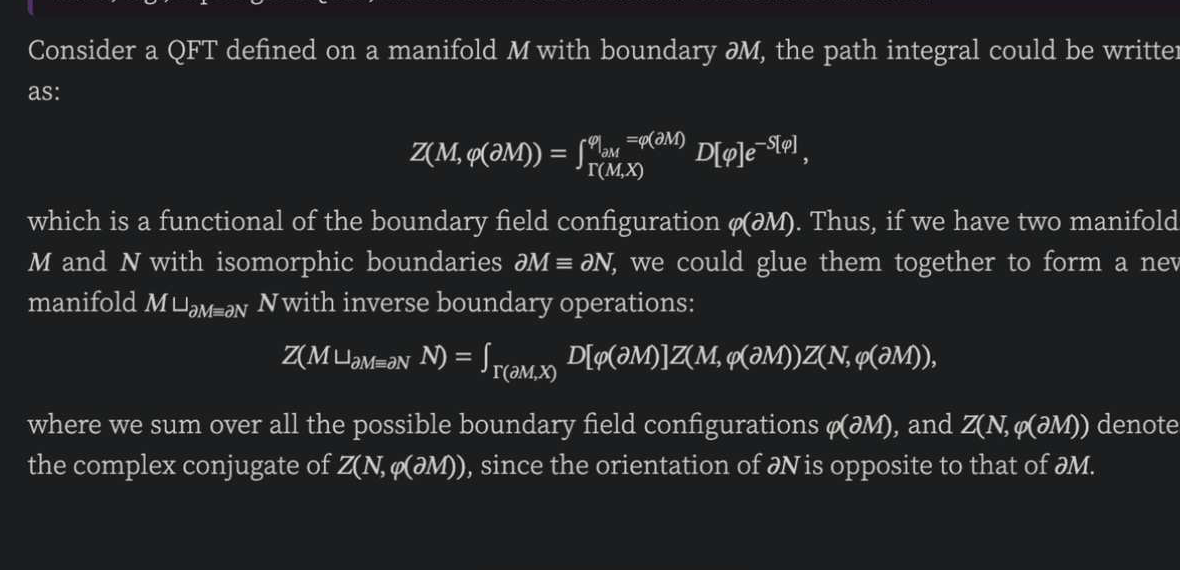
The blog’s global styles contain many rules meant for normal prose: fonts, line height, wrapping, image size, and overflow. They make sense for paragraphs, images, and code blocks, but inheriting them into mathmath can break things. The final fix was to stop using Libertinus MathLibertinus Math for display MathML and let it use the browser default mathmath font or STIX Two MathSTIX Two Math. The body text can still use Libertinus Serif. There was also a secondary issue: the wrapper around display formulas must not clip vertical overflow, otherwise tall formulas may get scrollbars or be cut off. So MathML now has a few dedicated CSS rules:


math {

            
  overflow-wrap: normal;

            
  white-space: normal;

            
  word-break: normal;

            
  word-wrap: normal;

            
}

            
math[display="block"] {

            
  math-style: normal;

            
  margin: 0;

            
  overflow: visible;

            
  text-align: initial;

            
}

            
.typst-native-math math {

            
  overflow: visible;

            
}

            
.typst-native-math.typst-inline-math {

            
  display: inline;

            
  line-height: normal;

            
  vertical-align: baseline;

            
}

            
.typst-display-math {

            
  margin: 0.75em 0;

            
  overflow: visible;

            
  text-align: center;

            
}

            
math {

            
  overflow-wrap: normal;

            
  white-space: normal;

            
  word-break: normal;

            
  word-wrap: normal;

            
}

            
math[display="block"] {

            
  math-style: normal;

            
  margin: 0;

            
  overflow: visible;

            
  text-align: initial;

            
}

            
.typst-native-math math {

            
  overflow: visible;

            
}

            
.typst-native-math.typst-inline-math {

            
  display: inline;

            
  line-height: normal;

            
  vertical-align: baseline;

            
}

            
.typst-display-math {

            
  margin: 0.75em 0;

            
  overflow: visible;

            
  text-align: center;

            
}

            
math {

            
  overflow-wrap: normal;

            
  white-space: normal;

            
  word-break: normal;

            
  word-wrap: normal;

            
}

            
math[display="block"] {

            
  math-style: normal;

            
  margin: 0;

            
  overflow: visible;

            
  text-align: initial;

            
}

            
.typst-native-math math {

            
  overflow: visible;

            
}

            
.typst-native-math.typst-inline-math {

            
  display: inline;

            
  line-height: normal;

            
  vertical-align: baseline;

            
}

            
.typst-display-math {

            
  margin: 0.75em 0;

            
  overflow: visible;

            
  text-align: center;

            
}

            
math {

            
  overflow-wrap: normal;

            
  white-space: normal;

            
  word-break: normal;

            
  word-wrap: normal;

            
}

            
math[display="block"] {

            
  math-style: normal;

            
  margin: 0;

            
  overflow: visible;

            
  text-align: initial;

            
}

            
.typst-native-math math {

            
  overflow: visible;

            
}

            
.typst-native-math.typst-inline-math {

            
  display: inline;

            
  line-height: normal;

            
  vertical-align: baseline;

            
}

            
.typst-display-math {

            
  margin: 0.75em 0;

            
  overflow: visible;

            
  text-align: center;

            
}

The important points are simple. The mathmath element should not inherit prose-oriented forced wrapping rules. The outer display-math wrapper also should not clip overflow-yoverflow-y. Some formulas are simply taller than an ordinary line box, and clipping them makes the browser look guilty even when the real bug is CSS.

Result and Trade-Offs

After the migration, the overall visual result is close to the SVG version. It looks especially good in Safari. Chrome still has a few rough edges, but it is good enough for my use. For me, the main gain is that formulas return to the semantics of the web. Copying, assistive technology, and browser-native processing all feel more natural than treating formulas as images.

The biggest lesson from this migration is not to stare only at formula conversion. The real time usually goes into the boundaries: how the Astro plugin handles failures, whether CSS leaks into MathML, and whether the browser picks the wrong math font. Once those boundaries are handled, switching to MathML is not as complicated as I had expected.

Back to all articles

Loading comments...